

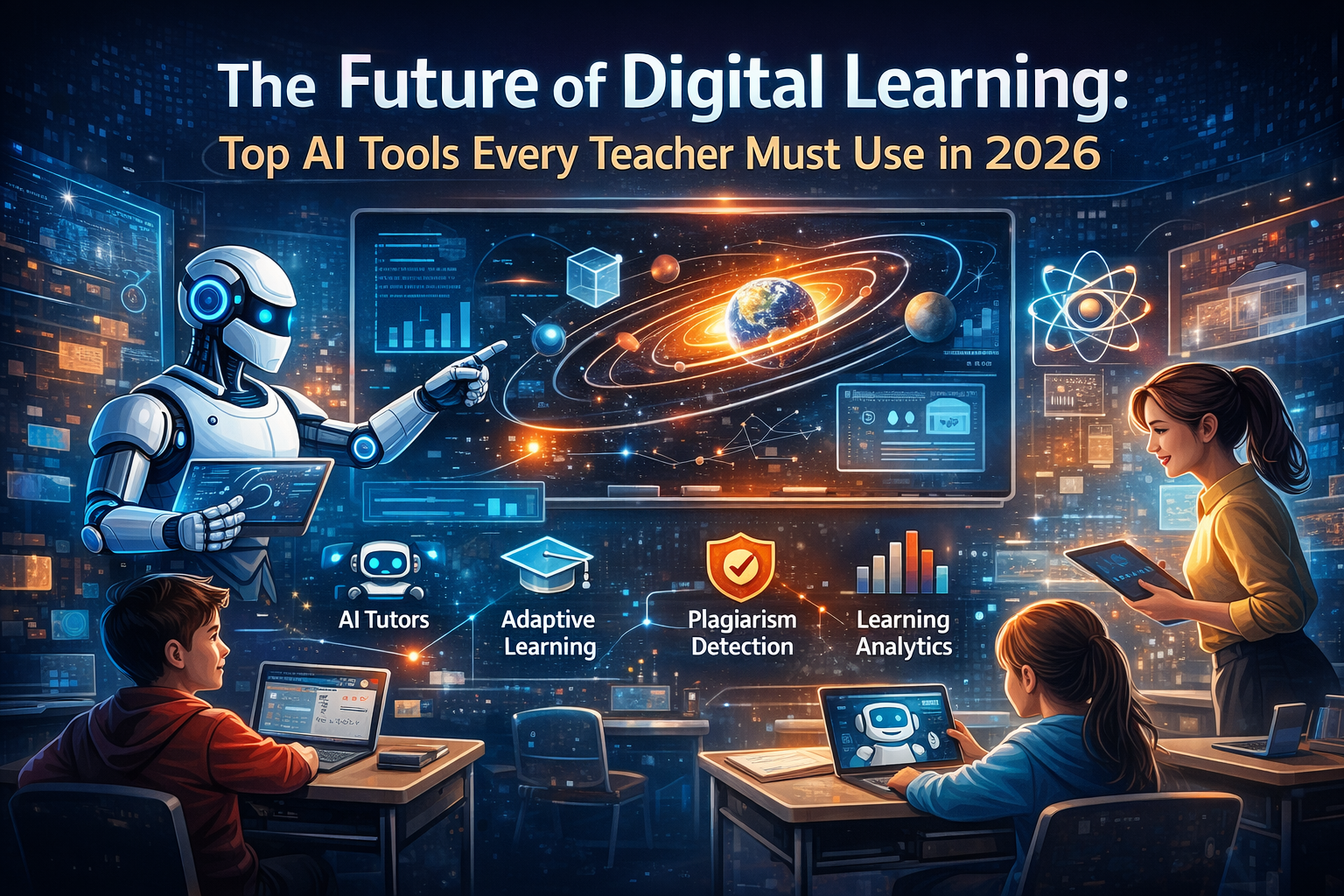
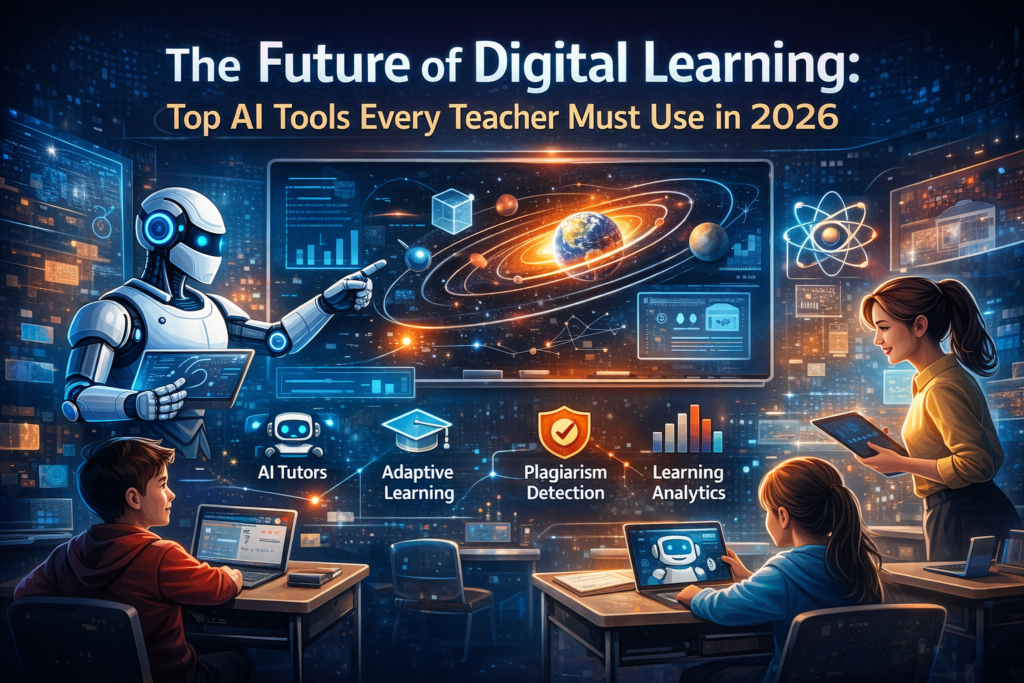
Artificial Intelligence (AI) is transforming education, empowering teachers to deliver personalized, engaging, and efficient learning experiences. As we approach 2026, a new generation of AI-powered tools is revolutionizing classrooms, lesson planning, student assessment, and content creation.
Why AI Matters in Digital Learning
AI enhances teaching by automating administrative tasks, providing real-time feedback, and tailoring instruction to individual student needs. These capabilities free educators to focus on meaningful interaction and student growth.
Top AI Tools Every Teacher Should Use in 2026
1. AI-Powered Personal Tutors
Platforms like MagicSchool.ai and TutorMe offer personalized tutoring that adapts to each student’s pace and learning style, helping close knowledge gaps efficiently.
2. Intelligent Lesson Planning
Tools such as Canva for Education and Gamma enable teachers to create visually rich, interactive lesson materials quickly, saving hours of preparation time.
3. Automated Grading and Feedback
AI assistants like Microsoft Copilot and Google Gemini streamline grading, providing instant, detailed feedback that supports student improvement.
4. Interactive Learning Platforms
Platforms like Curipod and Mentimeter engage students with quizzes, polls, and collaborative activities, making lessons more dynamic and inclusive.
5. Content Generation and Summarization
Writing assistants such as ChatGPT and Grammarly help teachers and students generate, edit, and summarize content, enhancing writing quality and clarity.
How to Integrate AI Tools Effectively
- Start Small: Introduce one tool at a time to allow smooth adoption.
- Train and Support: Provide training for teachers and students to maximize benefits.
- Maintain Privacy: Ensure AI tools comply with data protection regulations.
- Blend with Pedagogy: Use AI to complement, not replace, human teaching.
Benefits of AI in Education
- Personalized learning experiences
- Increased student engagement
- Reduced teacher workload
- Data-driven insights for better decision-making
Challenges and Considerations
- Ensuring equitable access to technology
- Addressing privacy and ethical concerns
- Avoiding over-reliance on AI
Conclusion
The future of digital learning in 2026 is bright with AI tools that empower teachers and enrich student experiences. By thoughtfully integrating these technologies, educators can foster more effective, inclusive, and inspiring classrooms.
Note: While I cannot add images directly to this page, consider including visuals such as:
- Infographics showcasing AI-powered personalized tutoring workflows
- Screenshots of AI lesson planning and grading tools in action
- Interactive platform interfaces with student engagement metrics
- Charts highlighting improvements in student outcomes with AI integration
These images will enhance understanding and SEO when added through your website’s content management system.