

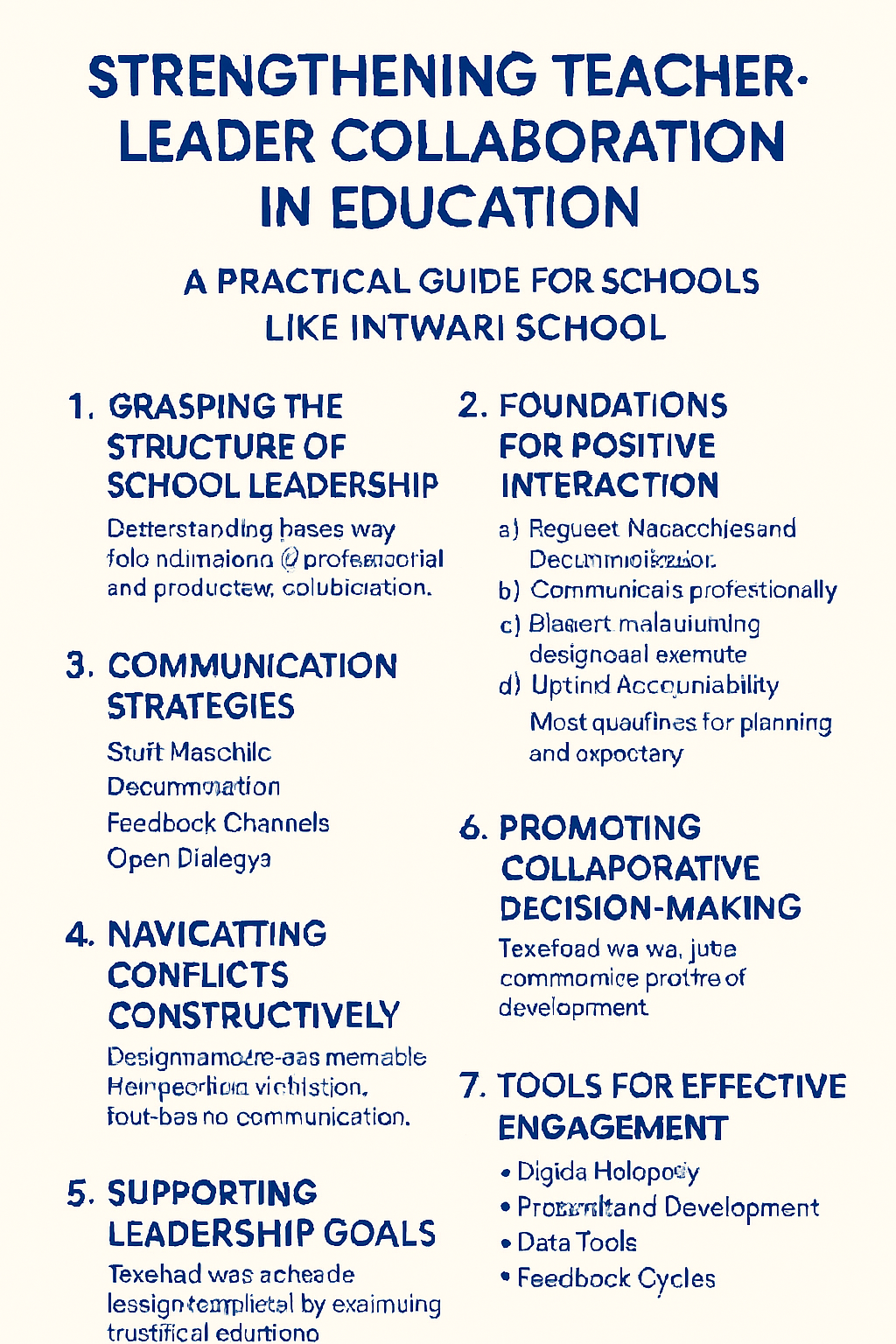
A Practical Guide for Schools Like INTWARI SCHOOL
Effective school leadership is the cornerstone of a successful educational institution. For schools such as INTWARI SCHOOL, strong collaboration between teachers and school leaders enhances academic performance, staff morale, and institutional credibility.
This guide presents actionable strategies and best practices to help teachers engage constructively with school leadership.
1. Grasping the Structure of School Leadership
Understanding leadership roles is essential for respectful and productive collaboration:
- Headteacher/Principal: Oversees all school operations and strategic direction
- Deputy/Assistant Leaders: Manage departments and support school-wide initiatives
- Subject Coordinators: Lead curriculum planning and academic delivery
Teachers who understand these roles foster mutual respect and contribute more effectively to school goals.
2. Foundations for Positive Interaction
a) Respect Hierarchies and Responsibilities
- Acknowledge leadership authority and decisions
- Align your teaching role with institutional objectives
- Avoid public criticism of leadership choices
b) Communicate Professionally
- Use respectful, clear, and concise language
- Share updates and concerns through appropriate channels (e.g., meetings, emails)
- Provide constructive feedback
c) Focus on Solutions
- Present issues with suggested remedies
- Prioritize student success over personal grievances
d) Uphold Accountability
- Meet deadlines for planning and reporting
- Track and report student progress accurately
- Accept and apply feedback for improvement
3. Communication Strategies That Work
- Staff Meetings: Attend regularly and contribute meaningfully
- Documentation: Maintain organized records for evaluations and follow-ups
- Feedback Channels: Use surveys or anonymous platforms to share ideas
- Open Dialogue: Engage in discussions while respecting final decisions
✅ Example: When submitting a student performance report, include:
- Key observations
- Progress trends
- Challenges encountered
- Recommended interventions
4. Navigating Conflicts Constructively
Disagreements are inevitable. Handle them with:
- Calm, fact-based communication
- Objective analysis over emotional reactions
- Mediation when necessary
- Confidentiality and professionalism
This approach preserves harmony and keeps learning uninterrupted.
5. Supporting Leadership Goals
Teachers can reinforce leadership efforts by:
- Adhering to school policies
- Participating in extracurricular and community programs
- Contributing to digital initiatives (e.g., school apps, e-learning)
- Mentoring colleagues
- Providing reliable data for decision-making
Such involvement builds trust and strengthens school culture.
6. Promoting Collaborative Decision-Making
Teachers are valuable contributors to school development. Engage by:
- Proposing improvements in pedagogy
- Sharing creative ideas for student engagement
- Volunteering for committees or projects
- Offering feedback on curriculum delivery
This cultivates shared ownership and mutual respect.
7. Tools for Effective Engagement
- Digital Platforms: Email, WhatsApp, school apps
- Professional Development: Leadership and communication workshops
- Data Tools: Google Sheets, School Management Systems, Firebase apps
- Feedback Cycles: Regular reviews between teachers and leaders
Conclusion
Strong teacher-leader relationships are built on respect, professionalism, and shared purpose. Teachers who engage constructively not only support leadership goals but also elevate student outcomes and institutional success.
In schools like INTWARI SCHOOL, this collaboration ensures academic excellence, staff cohesion, and the credibility of digital platforms—essential for maintaining standards like Google AdSense compliance on educational websites.