

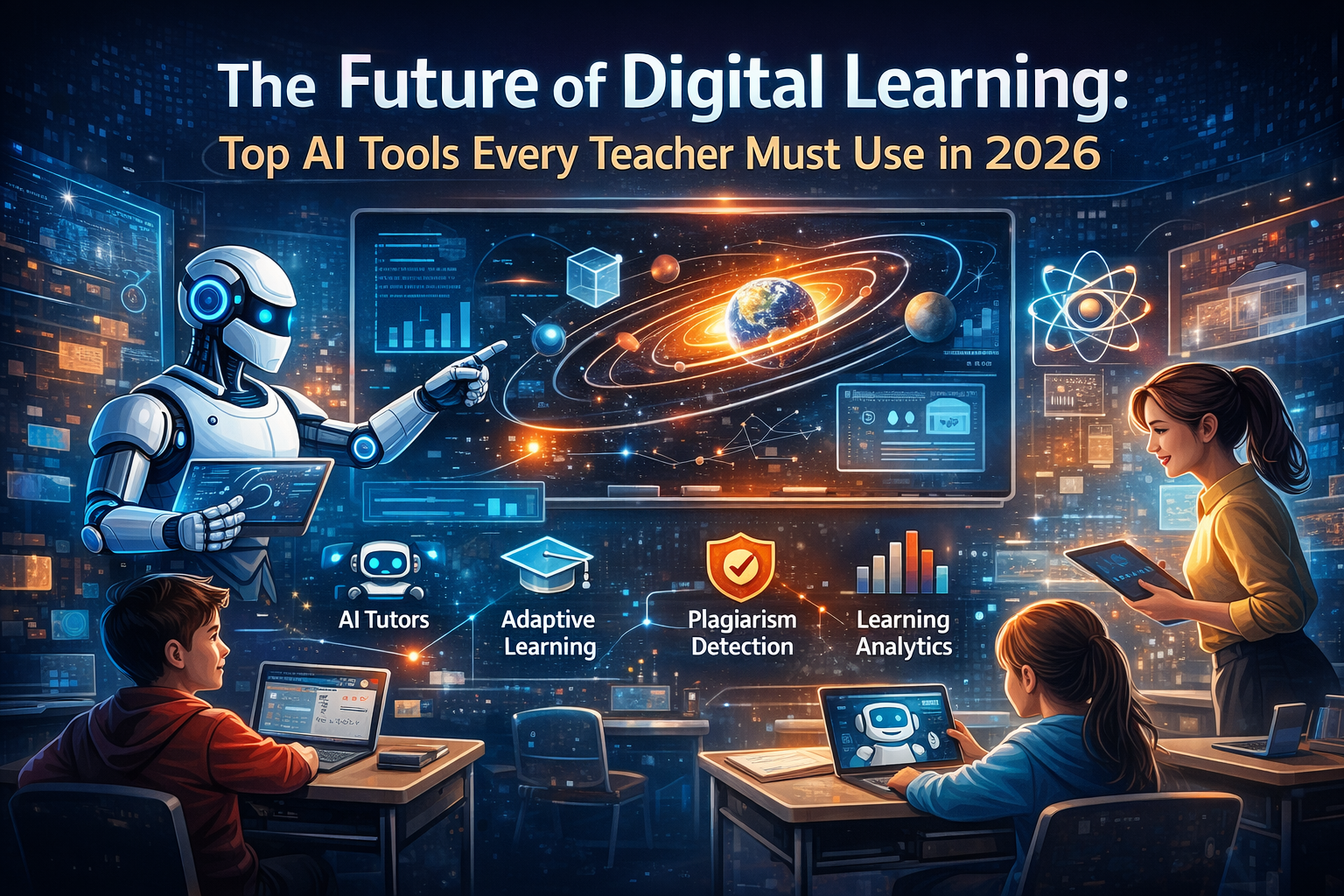
Digital learning is evolving at lightning speed, and Artificial Intelligence (AI) in education is leading this transformation. Teachers, schools, and educational platforms like Uburabyo.com can leverage AI to create personalized, interactive, and efficient learning experiences, while ensuring content integrity and platform compliance.
In this article, we explore the most effective AI tools for teachers, how they improve student engagement and learning outcomes, and best practices for safe and ethical AI use in classrooms and online education.
Why AI is Revolutionizing Modern Classrooms
AI is changing how teachers manage classrooms and engage students by:
- Automating repetitive administrative tasks
- Analyzing student performance data
- Personalizing lessons for individual learners
- Detecting plagiarism and low-quality submissions
- Enhancing engagement through gamified and multimedia content
For instance, AI can analyze hundreds of assignments in minutes, identify learning gaps, and suggest customized exercises for each student. This allows teachers to focus more on mentoring, providing feedback, and fostering classroom interaction.
Top AI Tools Teachers Should Know
1. Adaptive Learning Platforms
Adaptive platforms like Knewton, Smart Sparrow, and DreamBox use AI to:
- Track student progress in real-time
- Adjust lesson difficulty according to performance
- Recommend personalized learning paths
✅ Teachers gain automated insights while maintaining full control over the curriculum, enabling data-driven instruction.
2. AI-Powered Tutoring Tools
AI tutors provide instant support outside the classroom:
- Chatbots answer repetitive questions
- Interactive simulations reinforce complex concepts
- Immediate feedback prevents misunderstanding
Example: A student struggling in mathematics can get step-by-step guidance instantly, without waiting for a teacher.
3. Plagiarism Detection and Content Verification
Maintaining original, high-quality content is crucial. AI tools like Turnitin and Grammarly:
- Detect copied or unedited AI-generated text
- Highlight low-quality submissions
- Recommend improvements
✅ This ensures that educational platforms like Uburabyo.com comply with Google AdSense content policies and maintain credibility.
4. Speech and Pronunciation Tools
Language learning is enhanced with AI-powered tools like Duolingo, Elsa Speak, and Pronunciation Coach:
- Improve speaking skills and accents
- Provide instant error feedback
- Track learning progress over time
Teachers can integrate these tools to boost English, French, or other language programs effectively.
5. Learning Analytics and Reporting
AI can analyze data from Learning Management Systems (LMS) like Moodle, Canvas, and Google Classroom to:
- Generate detailed performance reports
- Predict students at risk of failing
- Recommend interventions
📊 Administrators and teachers can make informed, data-driven decisions by understanding attendance, engagement, and performance trends.
6. Gamified Learning and Interactive AI Tools
AI enhances gamified learning platforms by:
- Adjusting difficulty based on student ability
- Rewarding progress automatically
- Encouraging problem-solving and critical thinking
Example: Using Scratch with AI-assisted hints, students can learn coding while staying engaged and challenged.
Best Practices for Using AI in Schools
- Ethical AI Use
- Avoid generating unverified or copied content
- Protect student data privacy and security
- AI Complements Teachers
- AI should assist, not replace human guidance
- Maintain Google AdSense Compliance
- Ensure content is original and high-quality
- Avoid click manipulation or low-value content
- Allow Googlebot to crawl educational pages
- Monitor AI Performance
- Track analytics to identify anomalies
- Combine AI insights with teacher judgment
Example: AI in Classroom Workflow
| Task | Traditional Method | AI-Enhanced Method |
|---|---|---|
| Grading assignments | Manual review | AI auto-scores multiple-choice & flags errors |
| Homework support | Teacher answers | AI tutor provides instant feedback |
| Reading practice | Teacher observation | AI tracks fluency & pronunciation |
| Lesson planning | Manual prep | AI suggests tailored exercises based on class performance |
| Engagement tracking | Subjective | AI provides analytics on time spent & interaction |
Conclusion: Embracing AI for Smarter Education
AI in education is transforming classrooms from passive learning spaces to interactive, personalized, and data-driven experiences. For teachers and schools, AI:
- Reduces administrative burden
- Supports student growth
- Ensures content quality and AdSense compliance
SEO Keywords to Target:
- AI in education
- AI tools for teachers
- Digital learning platforms
- Adaptive learning AI
- Plagiarism detection AI
- Gamified learning AI
- Online learning tools 2026
- Personalized education technology